
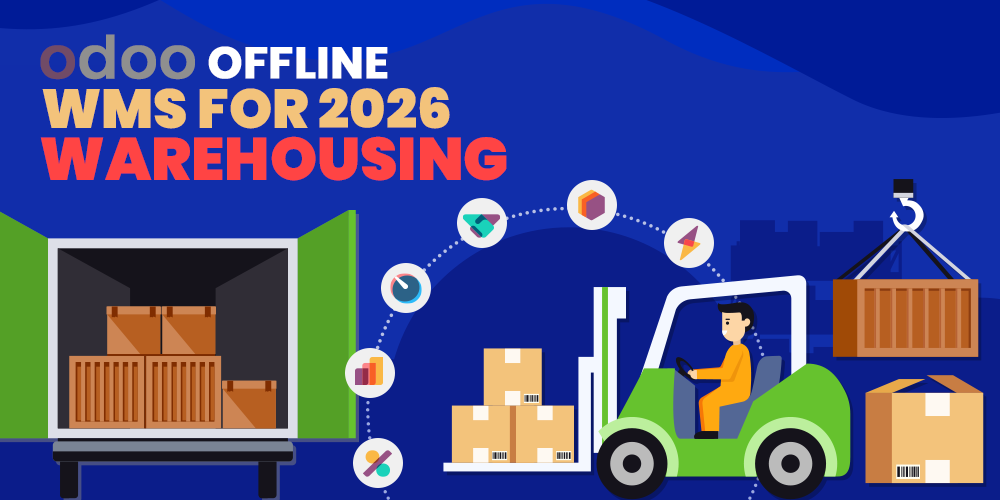
ComstarUSA supports warehousing and logistics SMEs preparing for the structural changes expected in 2026. Warehouses are transitioning from simple storage environments into digitally traceable fulfillment hubs, driven by policy changes, customer expectations, and supply chain modernization. As regulatory frameworks tighten around electronic audit trails and batch-level traceability, warehouses need systems capable of capturing data at the point of movement, not after-the-fact via manual logs.
Several converging forces are shaping the warehouse of 2026. Customers expect real-time visibility into order status, delivery windows, and stock availability. Suppliers demand accurate consumption signals and automated replenishment triggers. Regulators are moving toward digital documentation, verified inventory valuation, and auditable movements across supply chains. Meanwhile, labor shortages are accelerating automation and handheld device adoption within the warehouse floor.
In practice, this creates a dependency on continuous digital capture. Barcode-driven receiving, picking, transfer, and dispatch processes reduce errors, eliminate reconciliation labor, and enhance traceability. However, most warehouses are not connectivity-ideal. Deep storage aisles, metal racking, insulated walls, and mixed indoor–outdoor layouts disrupt signal strength. Even modern Wi-Fi mesh systems suffer from coverage gaps. When cloud ERPs require constant connectivity, workflows stall the moment devices lose signal. This introduces delays, miscounts, and fragmented fulfillment sequences.
Odoo solves this through offline-capable WMS modules that allow workers to continue scanning, picking, and transferring materials even without internet access. Devices synchronize once connectivity returns, preserving sequence and timestamp integrity. This protects audit chains that are essential to compliance and valuation. Offline WMS also reduces operational downtime, preventing bottlenecks that would otherwise force workers into manual workaround processes.
For SMEs in warehousing, light manufacturing, and distribution, the offline layer also enables cleaner accounting. Inventory valuations flow directly into financial reporting without requiring manual data reconstruction. This becomes critical as 2026 policies introduce more stringent tax, duty, and documentation expectations. Platforms such as Odoo allow SMEs to meet these requirements without expanding administrative overhead.
Automation is another dimension reshaping 2026 warehouse design. While robotics deployment is accelerating, most SMEs are adopting handheld scanners and mobile terminals as their first stage of digital transformation. Odoo’s compatibility with device ecosystems provides a smooth entry point into automation without forcing high upfront capex.
The strategic principle is clear: the warehouse of 2026 demands both traceability and continuity. Offline ERP capabilities ensure that compliance, valuation, and order execution do not depend on perfect Wi-Fi conditions. Odoo provides SMEs with a unified platform that meets operational, regulatory, and automation requirements simultaneously.
ComstarUSA continues to help SMEs deploy Odoo in warehousing environments where traceability and uptime are becoming core competitive requirements.
FAQs
- What is the “Warehouse of 2026” concept?
The Warehouse of 2026 refers to future-ready warehouse operations that rely on automation, real-time traceability, and offline continuity to ensure resilience, efficiency, and compliance in increasingly complex supply chains.
- How does Odoo ERP support warehouse automation?
Odoo ERP automates warehouse workflows, including inventory tracking, barcode scanning, picking, packing, and replenishment, reducing manual errors and improving operational speed.
- Why is traceability critical in modern warehouse operations?
Traceability enables businesses to track products across batches, serial numbers, and locations, supporting quality control, regulatory compliance, and faster issue resolution.
- What does offline continuity mean in a warehouse ERP?
Offline continuity allows warehouse teams to continue operations during internet or system outages, ensuring uninterrupted data capture and automatic synchronization once connectivity is restored.
- Is Odoo ERP suitable for large or multi-location warehouses?
Yes. Odoo ERP scales effectively across multi-warehouse and multi-location operations, offering centralized visibility while supporting localized, offline-capable workflows.
Conclusion
Book an appointment with ComstarUSA to modernize your warehouse with offline-capable Odoo WMS and prepare for 2026 compliance.