
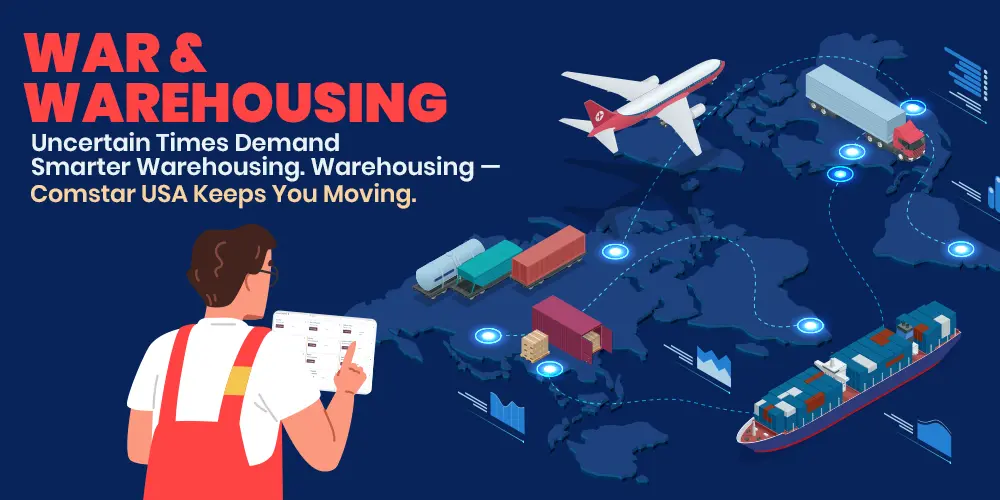
Global conflict has a way of exposing weaknesses that businesses didn’t realize could even exist until the Iran war. For warehouse operations, the ripple effects of this particular war is not abstract instead they show up in delayed shipments, volatile pricing, supplier uncertainty, and unpredictable demand cycles. The warehousing industry is one of the first industries to be impacted in global conflict.
In times like these, traditional systems begin to fail. Spreadsheets, disconnected tools, and manual tracking simply cannot keep up with the speed and complexity of disruption. What warehouse businesses need instead is visibility is real-time, accurate, and actionable.
This is where Odoo becomes more than just an ERP. It becomes an operational anchor for your business.
When supply chains are unstable, inventory accuracy becomes critical. Overstocking ties up cash during uncertain times, while understocking risks lost business. Odoo’s inventory and warehouse management modules provide real-time stock visibility across multiple locations, helping businesses make informed decisions quickly. This way you have enough time to inform your client or stocker way before your expectations are aligned.
The problems don’t just stop at supply issues they move towards internal chaos within the organization. The teams struggle to stay aligned when external conditions when things keep on shifting at this point the Odoo centralizes operations—sales, inventory, procurement, and accounting become a key player to help reduce the pressure within the different departments.
For warehouse businesses in the U.S., especially those operating in high-volume or multi-channel environments, agility is everything. The ability to pivot especially in turbulent times; whether it be sourcing from new vendors, adjusting pricing, or rerouting inventory—is what separates businesses that survive from those that scale.
ComstarUSA has worked closely with warehouse and distribution companies facing exactly these challenges. What sets us apart is not just implementation, but understanding the stakes. We recognize that during turbulent times, businesses don’t just need an ERP—they need systems that adapt to uncertainty.
Odoo offers that adaptability. And when implemented correctly, it transforms warehouses from reactive operations into resilient, data-driven ecosystems.
Because in times of disruption, control is everything—and Odoo puts that control back in your hands powered by ComstarUSA. Book a demo today!
FAQs
- How do global conflicts affect warehousing operations?
Global conflicts can disrupt supply chains, delay shipments, increase transportation costs, and create inventory shortages. Warehouses must adapt quickly to changing logistics routes and fluctuating demand.
- Why is warehouse management important during global conflicts?
Effective warehouse management helps businesses maintain inventory visibility, avoid stock shortages, and respond quickly to supply chain disruptions caused by geopolitical instability.
- How does Odoo help stabilize warehouse operations?
Odoo provides real-time inventory tracking, automated procurement, and integrated supply chain management tools that help companies maintain operational stability during global disruptions.
- Can ERP systems improve supply chain resilience?
Yes. ERP systems centralize business data, automate logistics processes, and provide predictive insights, allowing companies to make faster decisions and mitigate supply chain risks.
- Why are businesses upgrading ERP systems during supply chain disruptions?
Businesses are upgrading ERP systems to improve inventory management, enhance forecasting, reduce operational inefficiencies, and ensure continuity during unpredictable global events.