
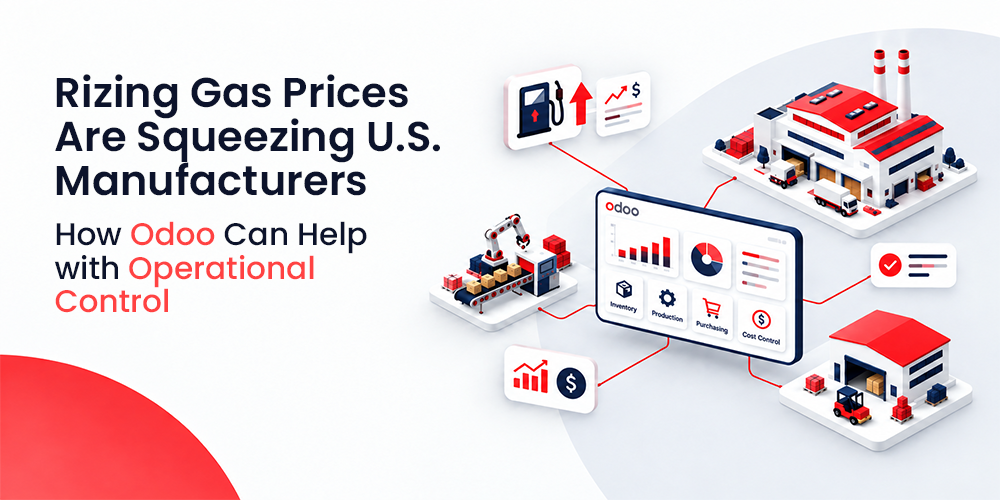
Rising gas prices are putting extra pressure on U.S. manufacturers, affecting transportation, deliveries and everyday operating costs. While businesses cannot control fuel prices, they can control how efficiently they manage their resources. A connected manufacturing platform can bring key operations together and give manufacturers better operational control.
For manufacturers, managing costs is not just about spending less. It is also about reducing waste, planning ahead and having the right information when decisions need to be made. This is where an integrated platform like Odoo can help.
Why Rising Gas Prices Affect Manufacturing
Higher fuel prices can affect more than a company’s transportation budget. Manufacturers often rely on fuel to move raw materials, ship finished products and support different parts of their supply chain. When these costs increase, they can put additional pressure on profit margins.
The impact can also reach suppliers. If suppliers face higher transportation expenses, those costs may eventually appear in material prices. This means manufacturers need to pay closer attention to how they manage purchasing, inventory and production.
Strong operational control can help businesses understand where resources are being used and where unnecessary costs may be reduced. Instead of reacting to each cost increase separately, companies can look at their overall operations and make practical adjustments.
Use Production Planning to Improve Manufacturing Process
Good production planning helps manufacturers avoid unnecessary delays, material shortages and last-minute decisions. When costs are already rising, these issues can become even more expensive. Having a clear production plan helps teams use materials, time and resources more effectively. Odoo connects manufacturing with inventory, purchasing and planning. This gives teams a clearer picture of what needs to be produced, what materials are available and what needs to be ordered.
This can help manufacturers improve manufacturing process management by reducing avoidable delays and making production easier to coordinate. Better planning can also help businesses respond to changing demand. If orders increase or decrease, teams can adjust production plans based on current information rather than relying on outdated spreadsheets or guesswork.
Manage Inventory Without Unnecessary Costs
Inventory can quickly become an expensive part of manufacturing when it is not managed properly. Too much stock takes up space and ties up money, while too little can bring production to a stop when an important material is unavailable. Odoo gives manufacturers visibility into stock levels, inventory movements and purchasing requirements. This makes it easier to see what is available and identify what needs to be replenished.
Better visibility supports operational control because purchasing teams can make decisions based on actual inventory needs. It can also help businesses identify slow-moving or excess stock before it becomes a larger problem. The goal is not to keep inventory as low as possible. It is to maintain enough stock to support production without unnecessarily tying up resources.
Connect Purchasing With Production
Purchasing and production need to work together. When these processes are disconnected, businesses may order materials too early, too late or in quantities that do not match actual production needs. Connecting the two gives purchasing teams a better understanding of what production requires. At the same time, production teams can have greater visibility into incoming materials and expected deliveries.
This can support improving operational efficiency by reducing unnecessary communication and manual follow-ups between departments. For example, if a key material is running low, the purchasing team can respond before it causes a production delay. If demand changes, upcoming purchases can also be reviewed before the company spends money on materials it may not need.
Get a Clearer View of Manufacturing Costs
Fuel is only one part of the cost equation for manufacturers. Materials, labor, transportation, storage and purchasing all contribute to the cost of producing and delivering goods. When this information sits in separate systems, it can take time to understand what is really affecting expenses. Managers may need to collect information from several departments before they can make a decision.
An integrated system can bring these areas together and provide stronger operational control. Teams can review related information in one place and get a better understanding of how different activities affect the business. This does not mean every cost can be eliminated. Instead, manufacturers can identify areas where spending may be reduced or processes can be handled more efficiently.
Reduce Waste in Everyday Operations
Waste in manufacturing is not limited to unused materials. It can also include excess inventory, production delays, unnecessary movement and time spent entering the same information into different systems. When these issues happen repeatedly, they can add up and affect overall costs. Better visibility can help businesses identify where these problems are happening and decide what needs to change.
Odoo connects different business functions, helping teams follow processes more easily from planning through production and inventory management. For companies focused on improving operational efficiency, even small changes can make a difference. Reducing repeated delays or avoiding unnecessary purchases can create savings over time.
Make Better Decisions With Connected Data
Manufacturing decisions often affect several departments at once. A change in production can affect inventory, which can then affect purchasing and delivery schedules. When departments use disconnected information, it becomes harder to see the full impact of a decision. Teams may spend more time collecting updates before they can take action.
Connected data gives managers a clearer picture of what is happening across the business. This can strengthen operational control and make everyday decisions easier. For example, when customer demand changes, manufacturers can review production requirements and current inventory before placing new orders. Having this information available together can help teams respond without unnecessary delays.
Improve Manufacturing Process Visibility
Manufacturing involves many moving parts, so visibility matters. Production teams need to know what materials are available, purchasing teams need to understand upcoming requirements and managers need to see how the overall operation is performing.
When this information is scattered, small problems can easily turn into larger delays.
An integrated platform can connect these activities and give teams a more consistent view of their processes. This can help manufacturers improve manufacturing process management and identify problems earlier. For instance, if production is waiting for a missing material, teams can investigate the issue sooner. If inventory is higher than expected, purchasing decisions can be reviewed before additional stock is ordered.
Build a More Efficient Manufacturing Operation
Rising gas prices are difficult to predict, but manufacturers can still improve how they respond to changing costs. Better planning, resource management and connected processes can make daily operations easier to manage. Odoo brings manufacturing, inventory, purchasing and planning together in one platform. This gives teams access to information that can help them manage resources and coordinate different activities.
A connected approach can support improving operational efficiency without requiring businesses to completely change the way they operate overnight. The aim is not to add technology simply because it is available. It is to use the right tools to solve real operational problems, reduce unnecessary work and help employees make better decisions.
Strengthen Long-Term Operational Control
Fuel prices may change, but the need for efficient operations is not going away. Manufacturers need systems that can adapt as demand, costs and business requirements change. Building stronger operational control can help businesses stay organized and respond more confidently when conditions shift. With connected information, teams can monitor processes, identify issues and make adjustments based on current data.
Odoo can support this approach by connecting important manufacturing activities instead of keeping them in separate systems. Over time, this can give manufacturers a stronger foundation for managing costs and supporting growth.
Final Thoughts
Rising gas prices are creating another challenge for U.S. manufacturers, but businesses still have control over how they manage their internal operations. Better production planning, inventory management and connected data can help reduce avoidable costs.
Odoo can help manufacturers bring these processes together, improve visibility and make day-to-day decisions easier. It can support better operational control, help businesses improve manufacturing process management and contribute to improving operational efficiency. Manufacturers cannot control fuel prices, but they can control how efficiently they use their time, materials and resources. With the right systems in place, businesses can be better prepared for changing costs while keeping their operations moving forward.