
Tariff changes, rising operating costs, shifting customer demand and pressure to keep inventory moving are changing how businesses think about warehousing in 2026. A warehouse is no longer a place where products wait before shipment. It has become a source of warehouse intelligence and operational data that can help teams understand costs, identify delays, reduce waste and respond faster.
For companies the challenge is not a lack of information but having too much information spread across different systems. The next stage of warehouse management is about bringing those pieces and turning them into decisions people can act on.
Why Tariff Pressure Is Changing Warehouse Priorities
Import costs can affect more than the purchase price of goods. When duties or trade policies change businesses may need to reconsider purchasing quantities, supplier choices, inventory levels and storage decisions. These pressures can make traditional warehouse practices harder to maintain for companies that depend on imported materials or products.
Holding stock may protect against shortages but it also ties up cash and uses valuable storage space. Ordering little can create stockouts and delayed deliveries. Warehouse teams therefore need a view of what is moving, what is sitting and where costs are building up. This is where warehouse intelligence becomes useful. By looking at individual reports managers can connect inventory, purchasing, sales and operational data to see how changes in one area affect the rest of the business.
From Warehouse Data to Better Decisions
A modern warehouse produces data at every step. Products are received, counted, stored, picked, packed, moved, returned and shipped. Each activity can reveal something about inventory accuracy, labor use order flow or customer demand. The value comes from making that information easier to understand and use. A business intelligence warehouse approach can help organize data into useful reports and dashboards allowing managers to review patterns instead of relying only on manual checks or end-of-month summaries.
For example a manager may discover that a certain product is frequently reordered but spends long in storage. Another item may sell quickly. Regularly experience picking delays. These details can be easy to miss when information is kept in systems. Warehouse intelligence helps bring these signals so teams can focus on the issues that need attention. It does not replace judgment. Instead it gives people a starting point for making decisions.
What Warehouse Monitoring Software Can Track
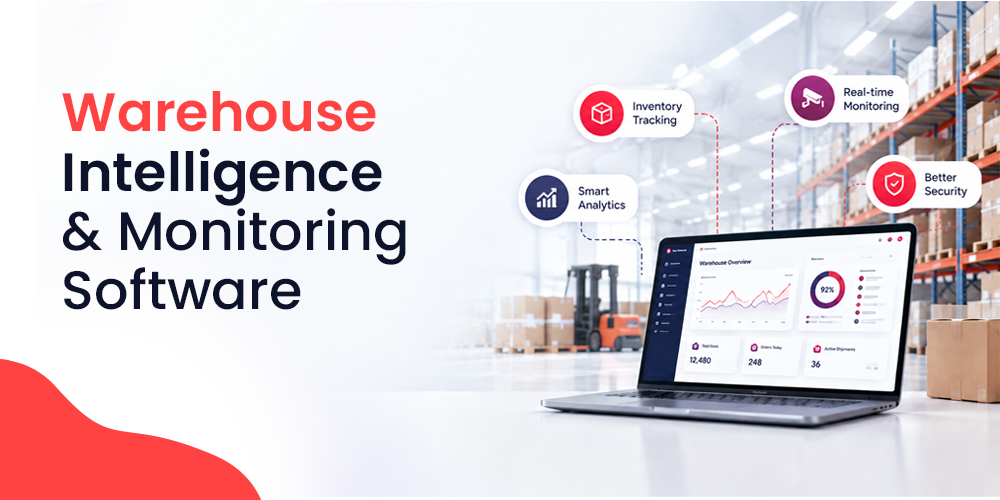
Good visibility starts with knowing which warehouse activities matter most. Warehouse monitoring software can support this by collecting and presenting information about inventory movement order status, stock levels and operational activity. The right metrics depend on the type of warehouse and the decisions managers need to make. A useful system should make important changes easier to spot than simply adding more reports.
Managers may need to monitor inventory levels, stock movement, receiving activity order processing times picking and packing performance moving products, stock discrepancies, returns, storage capacity and fulfillment delays. The exact information will vary by business. A distributor may care most about order fulfillment and stock availability while a manufacturer may need visibility into raw materials production schedules and finished goods. The important point is to monitor information that supports decisions. A dashboard filled with numbers is not automatically useful. Teams should be able to see what changed, why it matters and what action may be required.
Connecting Warehouse Operations With Business Systems
Warehouse performance does not exist separately from the rest of a company. Purchasing affects inventory sales forecasts affect replenishment accounting affects the cost picture and customer service is affected when orders are delayed or products are unavailable. These connections make integrated information increasingly important for warehouse management. A connected ERP environment can provide a shared view of areas such as inventory, sales, purchasing, accounting and customer operations.
A business intelligence warehouse setup can become more valuable when the underlying data is connected rather than maintained in isolated spreadsheets. Teams can compare activity with financial and sales information instead of switching between multiple sources. This can make it easier to understand why inventory costs are changing or where fulfillment problems are coming from. For companies using ERP software or considering a move to an integrated platform this approach can also reduce duplicate data entry and make reporting more consistent.
Why Real-Time Visibility Matters in 2026
Warehouse decisions often lose value when information arrives late. If a manager learns about a stock shortage after an important order has already been delayed the report may explain what happened but do little to prevent it. Earlier visibility gives teams time to respond to changing conditions. It can also reduce the need to rely on assumptions when making operational decisions.
Time or near-real-time visibility can help teams identify unusual inventory movements, order backlogs, replenishment issues or operational slowdowns while there is still time to respond. This does not mean every warehouse needs automation or a completely autonomous operation. The first step can be much simpler: make existing data visible, reliable and easier to understand.
Building a Smarter Warehouse Without Overcomplicating It
A warehouse transformation does not have to begin with a technology project. Businesses can start by identifying the questions they struggle to answer today. This creates a basis for deciding which information needs to be collected, connected or monitored. Can the team quickly tell which products are sitting long? Can purchasing see inventory pressure? Can management identify recurring fulfillment delays? Can finance connect inventory decisions with their effect on working capital?
These questions help determine what information actually needs to be collected and reported. From there businesses can improve data quality, connect systems, define useful metrics and create dashboards around daily operations. Warehouse monitoring software can support this process when it fits the business and its existing systems. The goal should be visibility rather than technology for its own sake.
What the Future of Warehousing Looks Like
The warehouse of the future is likely to be more connected, measurable and responsive. Human workers will continue to play a role while software, analytics, sensors and automation can handle more of the repetitive monitoring and analysis. The focus will increasingly be on helping people make decisions rather than simply collecting more information. This is where warehouse intelligence can become part of warehouse management.
Warehouse intelligence will also become less about looking at reports and more, about spotting issues early. Better forecasting can support purchasing decisions, accurate inventory data can reduce unnecessary stock and clearer operational reporting can help managers address bottlenecks before they become customer-facing problems. At the time businesses will need to be selective. Not every warehouse needs robotics, advanced artificial intelligence or a new system. The right investment depends on the size of the operation, product mix, existing technology and business goals.
The practical path is to build a reliable information base first then add tools that solve specific problems. As tariff pressure and operating uncertainty continue to affect supply chains that approach can make warehouse decisions more deliberate. Of simply storing products and reacting to problems businesses can use their operational data to understand what is happening and respond with greater confidence.