
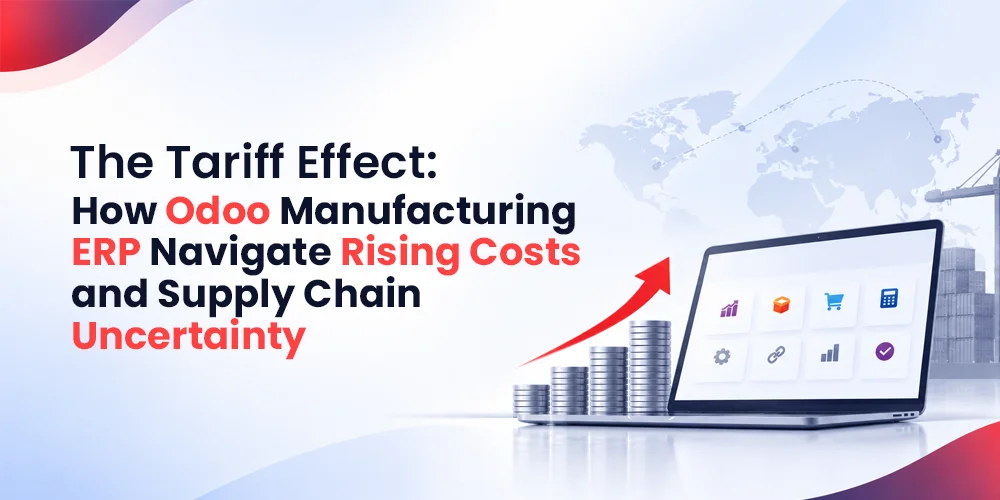
US manufacturers are under growing pressure from shifting import costs, rising supplier prices and uncertainty about material availability. When tariffs increase the cost of imported parts, the effects go beyond purchase prices. They can impact production budgets, product pricing and overall profit margins. Odoo Manufacturing ERP helps businesses track inventory, suppliers, production needs and expenses through connected business systems. With better visibility and control over daily operations, manufacturers can make informed decisions and stay agile in the face of change.
Why Rising Tariffs Are Challenging US Manufacturers
Tariffs can push up the price of materials, components and finished goods that come from abroad. When this happens suppliers often pass on costs to their customers. This means manufacturers may have to absorb the expense, negotiate new pricing agreements or raise prices for their own products. The right move depends on factors like supplier relationships, how easy it is to find materials and how much customers are willing to pay.
Uncertainty also makes planning more difficult. Suppliers may change prices, delay deliveries or stop supplying items without much warning. For manufacturers that depend on materials from overseas this can mean the need to find suppliers or adjust production schedules quickly. These changes create risk. Require fast informed responses. Odoo Manufacturing ERP helps bring purchasing, inventory, production and financial data in one system. While it cannot stop tariffs from increasing costs it gives companies the tools to understand how those costs affect their operations and to explore options.
Improve Inventory and Material Availability
When supply becomes unpredictable manufacturers need to know what materials are on hand, what is coming in and what upcoming production orders will need. Holding little stock can interrupt production. Holding much ties up cash and increases storage costs.
Odoo Inventory gives teams the ability to track stock levels, manage warehouse activities and follow product movement. Teams can check quantities and see what is due to arrive next then compare that to what production requires. Reordering rules can automatically flag when stock is running low based on business rules.
For example if an imported part gets more expensive a manufacturer can check its inventory before placing another order. This helps purchasing teams decide whether to buy at a higher price or wait for better conditions. Odoo Manufacturing ERP connects inventory data with production needs leading to purchasing choices.
Manage Supplier Changes and Purchasing Costs
Even if a manufacturer has materials for the moment, changes from suppliers can still cause problems. A regular supplier might raise prices, take longer to deliver or stop supplying items. Businesses must then look at alternatives while still weighing quality, reliability, payment terms and delivery times.Odoo Purchase helps manage supplier records requests for quotations and purchase orders. Purchasing teams can keep a history of transactions and compare different quotes before making a final decision.
For instance a company that imports electronic parts may get a quote from its usual supplier. The purchasing team can then ask for quotes from other suppliers and compare the options before committing to higher costs.Manufacturing ERP Software keeps purchasing information organized. This makes it easier to compare suppliers. Companies must still look closely at supplier reliability and product quality before choosing a new source.
Keep Production Plans Flexible
Material delays or shortages can disrupt production schedules. Affect customer deliveries. Manufacturers may need to move production dates to focus on products or find approved alternatives. Making these changes requires real-time data on what’s needed and what is currently available. Odoo Manufacturing supports production orders, bills of materials and work centers. Bills of materials list all the parts and quantities needed to make a product. Production orders help. Track manufacturing steps.
For example a furniture maker waiting on imported hardware might have to change its production plan. Managers can check what materials are required for orders and coordinate with purchasing before making any adjustments. Odoo Manufacturing ERP links production data with inventory and purchasing information. This helps teams understand material availability and manage changes smoothly.
Monitor Expenses and Protect Profit Margins
When material prices go up profit margins can shrink especially if selling prices don’t change. Manufacturers must track how rising purchasing costs affect their financial health and spot where additional expenses are building. Odoo Accounting manages vendor bills, customer invoices, financial transactions and reports. Finance teams can keep records, review expenses and compare numbers against budgets or past periods.
For example if imported materials get more expensive finance managers can review purchases and discuss possible actions with production and purchasing teams. These conversations might include adjusting product prices, changing sourcing or reviewing manufacturing costs.Odoo Manufacturing ERP offers a connected view of operations and finance.. Protecting profits still depends on accurate data, regular financial checks and smart business decisions.
Connect Departments Through Shared Business Information
Tariff-related decisions involve departments. Purchasing teams track suppliers inventory teams manage stock production managers run schedules and finance teams handle costs. When these teams use tools or spreadsheets information can become outdated or inconsistent.Manufacturing ERP Software creates a shared space for managing business information. Odoo allows companies to manage purchasing, inventory, manufacturing and accounting through integrated apps.
For example when a supplier increases prices purchasing can update records. Inventory can check what stock is on hand. Production can review needs. Finance can assess the impact.With Odoo Manufacturing ERP departments work with the up-to-date data instead of gathering updates from different sources. This leads to coordination and more informed decisions.
Prepare for Continued Supply Chain Uncertainty
Manufacturers cannot control every change in tariffs, supplier decisions or shipping delays.. They can improve how they monitor costs, manage inventory and respond to new conditions.Odoo offers apps for inventory, purchasing, manufacturing and accounting that support these tasks. When set up to match business needs Odoo Manufacturing ERP helps teams access the right information and see how changing costs affect the whole operation.
A Manufacturing ERP Software solution works best when employees keep records and follow consistent processes. Companies should regularly check supplier performance, review material needs, check stock levels and look at production expenses.
The goal is not simply to buy inventory or switch suppliers every time prices rise. It is about finding a balance between material availability, production commitments, cash flow and profitability. With visibility into operations US manufacturers can make better choices and manage uncertainty with more confidence.